• pcfhb0r4-js-agberto-guimaraes

    The Function of Our Behaviors

    When we look at patterns of behavior, they can for the most part fall in to four categories: Access, Escape, Attention, and Sensory.  Why do we do what we do?  And why do we do it again? The study of the functions of human behavior, and the factors that make up the modern science of behavior analysis are could fill a library. This is just a brief glimpse in to the topic of functional relations, and the four functions.

    Before we get into that, let’s get into this.

    Have you ever heard of the choice-supportive bias? The gist of it is, we make a choice, and then later ascribe either more positive or negative rationalizations to it as though it were the actual reasons for the choice itself. We, in essence, attribute a more complex reasoning process to our choice for the sake of a narrative. This is a process that takes place after the behavior occurred.  Great for imaginative and alluring story-telling, but not great when we want to actually understand what maintains patterns of what we do. [4]

    In order to study these maintaining factors without a bias like this, we use what’s called a Functional Behavior Assessment. A Functional Behavior Assessment (FBA) is used to formulate and support theories on the ongoing “functional relations” between behaviors and their environment. A functional relation is a term used to describe that when one event or stimulus (antecedent) occurs, a behavior is more (or less) likely to follow it than it would be random. This is based off of past history of reinforcement (reward). [1,2,3] Behavior is adaptive, it evolves as we gain experiences. One doesn’t just “grow up” and get handed a book of things that we then do; it is a process of behaviors in our past that have worked or not worked for us that gives us the repertoire we have today. Certain medical conditions or physical disabilities exhibit behaviors that are not directly controlled by these functions. Ruling these out first is the best idea before looking specifically at a functional analysis. [2]

    Let’s go with an example:

    Bob walks to the store. He sees an orange on the shelf, picks it up, pays for it, and gets to eat that orange. The next day, he also walks in to the same store, looks for an orange, and goes through this same process again.

    A choice-supportive bias explanation might be that Bob really loves oranges, and that he knew the juiciest most amazing oranges come from that store, and he really loves the people in that store because they are so friendly when he pays, and he saw his friend John there the other day and John is from California, which must mean he remembered something about oranges, etc, etc, etc.

    Does that help explain the base question? Maybe. Is it something we can reliably test? Not very easily, and even if we did, many of those factors might be superfluous. In the most common practices of behavioral science, private events (thoughts, feelings, etc) exist, but they provide poor data and are actually subject to interpretation (self-report biases, attribution errors, poor recall, untruthful responses, etc), and are moderators rather than causal. [1,2] We rely mainly on observable events. Setting. The environment and past experience appears to play the greatest role on what we do and why we do it. It can explain these patterns more precisely than recollections which may be subject to bias. [1,2.3] Looking at this scientifically, we want a pattern. Patterns and replication are very helpful when producing theories. [1,2,3]

    All we need for the sake of this pattern are 3 things:

    The Antecedent (what happens before the behavior): Bob enters the store, and he looks at the orange.
    The Behavior (what did Bob do?): Bob purchases that orange.
    The Consequence (what did Bob get?):   Bob eats that orange.

    From these three things, we can see the first step of the pattern. If he returns to that store, and he sees a similar orange, and buys that orange, we can reasonably say that his behavior was reinforced (rewarded). Reinforcement is an effect on future behavior. It follows an initial behavior and increases the future likelihood of it occurring in similar situations (antecedent settings). The consequence? That was the reinforcement step. Bob ate the orange, and then pursed that same experience the next day or week. If he did not go back to that store, we could say that the behavior was not actually reinforced to any observable effect.

    Seeing these functional relations, we can pick apart the factors that hold us to our specific likes or dislikes, or why we do certain things in certain ways. They can help us change these patterns to a more socially appropriate, or even more functional alternative. An example might look like this, if Bob robbed the store instead, he would still access and be reinforced by the orange. Buying the orange was the “better” alternative and satisfied the same function.

     

    uipazkzjv64-jonathan-pielmayer.jpg

    Access, Attention, Escape, and Sensory:

    Let’s take a look at these four classes of maintaining functions.

    Access: This pertains mainly to tangible items. Items we can get. This could be food, vehicles, money, etc. These are things that you can see with your eyes and interact with.

    Attention: This pertains to an interaction, praise, or even a signal, from others. This could be a look, a conversation, etc. Any response or increase of awareness from others.

    Escape: This function relies on removal of an aversive item, situation, or stimulus related to a prior event which underwent punishment. Moving away from fires, for example. Avoiding interaction with specific people. This function is to get away from something, or avoid it entirely.

    Sensory: This function, unlike the others, does not rely on outside factors. These are internal rewards from the body itself. Physical contact, for example.


    Are they exclusive? Can’t a behavior be maintained by more than one?

    Absolutely, and that is more common than behaviors specifically maintained by individual factors. [1] Let’s take Bob for example, and his orange. You could hypothesize from what we have observed already that his orange buying behavior could be maintained by both Access, and Sensory. Going to that store, he gains access to oranges. While he eats it, it may provide reinforcement through sensory means as well (taste). The hypothesis is the first step of many. Testing each factor, or observing changes in the environment which has an impact on that behavior’s use in the future would yield more and more accurate representations of that functional relation between behavior and environment. [1,2]

    Other things to consider.

    There is a factor that also decreases the future probability of behavior. It follows the same rules as reinforcement, except that the behavior does not become a stronger habit or pattern, it lessens. In the same way that Bob may go to the store to get that orange, and has been for weeks, one day he might pick up a spoiled orange, and eat that orange. That would have an effect on this pattern of behavior. Instead of strengthening his pattern of buying and consuming oranges, it would either lead to an adaptation of his behavior (checking the orange for spots, for example), or reduce his visits to that store entirely. These are factors that we could track if we were keeping a log of how the setting, or environment, influences his behavior.

    Can you think of any examples you could fit in to this paradigm? How about some things that you have trouble fitting? Reach out! Let’s explore it.


    References:

    [1] Iwata, B. A. (1994). Functional analysis methodology: Some closing comments. Journal of Applied Behavior Analysis, 27(2), 413-418. doi:10.1901/jaba.1994.27-413

    [2] Hanley, G. (2012). Functional Assessment of Problem Behavior: Dispelling Myths. NCBI.

    [3] Oliver, A. C., Pratt, L. A., & Normand, M. P. (2015). A survey of functional behavior assessment methods used by behavior analysts in practice. Journal of Applied Behavior Analysis, 48(4), 817-829. doi:10.1002/jaba.256

    [4] Mather, M., Shafir, E., & Johnson, M. K. (2000). Misrememberance of options past: Source monitoring and choice. Psychological Science, 11, 132-138

    Photo Credits: http://www.unsplash.com

  • Hey readers, thanks for sticking around. As you may have realized my publications have dropped since my first one. Some, I took down to revise. Others never made it to the pages since work and research overwhelmed my daily schedule.

    I’ve come back with some better understanding on some topics, some of my own behavioral research, research reviews from stuff you may not be able to see behind the paywalls of academia, and other analysis of data sources that may provide some fun to relate to behavior analysis and more.

    So, topics you can expect to see soon.

    1. The Four Big Functions of Behavior- Escape, Attention, Stimulation , and Access- What the research says and real world examples.
    2.  Winning and Losing- What people tend to do after both.
    3. Patterns of Behavior- How you can track your own behavior in ways that matter.

    Thanks all! Reach out with any ideas you’d like to see at author@behavioralinquiry.com

  • In behavioral science we like to look at things that are concrete and observable. Why do people respond to specific scenarios and stimuli in different ways? How do they differ from one another? How can we adapt what we present in ways that either increase or decrease a person’s responding? These are questions we can apply to our area of interest; Video Games, in order to explore what game designers have put in to their medium to get you hooked and keep you hooked. Video Games require the audience to participate in ways that other art mediums do not. It is the direct responses of the consumer that shape and define their progress through the game and a hallmark trait of video games is using rewards as marks of progress that get people to play longer, increase their own skill at the game, and master objectives that the designers put in place. Let’s discuss some of the behavioral principles that may in play with the games you know and love. See if you can identify these concepts in your own experiences with video games.

    arcade-1254453
    Reinforcement vs. Rewards

    In behavioral science, we use the word reinforcement to define a consequence that strengthens a future behavior, when presented with the same setting/stimulus (antecedent). When a reinforcer is presented after a behavior, we expect to see the probability of that behavior to go up the next time the person is placed in that situation. It is the foundation of learning and operant behavior. Operant Behavior is a large piece of this conceptual puzzle; it is behavior that has been shaped to serve a purpose in the environment, which has been reinforced in the past. How does this differ from rewards? In gaming of all types, there are rewards. These are pre-set consequences or prizes that follow the completion of specific objectives laid out for the player. Some prizes/rewards are interesting to a player and keep them engaged with the game, and others do not, leading to disinterest or a falloff in responding (playing). What makes a reinforcer different from a reward, is that reinforcers are dependent on the individual’s future responding. When we say reinforcer, we are saying with a degree of certainty that this “reward” has effected behavior before and is preferred by the individual, because it has been shown to have worked in the past. Let’s look at this scenario:

    Player 1 must press the circle button when presented with a box in order to break the box and gain a prize (100 points).

    If Player 1 presses the circle button and breaks the box, and gets the 100 points, they have been “rewarded”.

    If Player 1 presses the circle button and breaks the box, gets the 100 points, and presses the circle button when presented with more boxes in the future, they have been reinforced.

    It could be said that 100 points was enough to reinforce the behavior. This effects future playing behavior by pairing a preferred stimulus (the points) with an operant behavior (pressing the circle button) in the presence of the box (antecedent). This is also called the Three Term Contingency.

    If game designers want their players to learn certain skills specific to their game, or keep people playing it, they need to focus on casting the widest net of reinforcers, rather than just rewards. Anything can be a reward, but only when it’s considered a reinforcer, will we see players use those skills to progress again and again.

    p1
    Schedules of Reinforcement:

    In the example above, we have a single situation, with a single reinforcer. Games are made up of varied scenarios, competing choices for the player to take, and sometimes we see two types of reinforcement used at the same time. How does that work? Sometimes a player is presented with an opportunity to complete two objectives at the same time. This brings a level of challenging complexity that most players enjoy more than a simplistic single system of reward, because it raises the stakes in terms of what they can receive. Let’s take a look at some simple schedules of reinforcement below:
    Fixed Ratio Reinforcement:
    In this schedule of reinforcement, we see a set rate of responding met with a set amount of reward. So if a player beats 1 adversary and receives 200 points, this is called a FR1 (fixed-ratio 1) ratio. If a player needs to beat 2 adversaries to receive 200 points, this is called a FR2 ratio, and so on. The benefit of this style of reinforcement schedule is that it is consistent and a player can depend on it. If they can predict the amount of points/rewards they receive for each action, they can match their responding to the amount of reinforcement which satisfies them.
    Variable Ratio Reinforcement:
    Some people know this schedule of reinforcement from RNGs (Random Number Generators) that are put in games to provide variability, and also for some people, a very strong system of reinforcement. Gambling also runs on this principle. With variable ratio, there is percentage that the response will be rewarded. Unlike the Fixed Ratio, prediction of the reinforcer does not follow a fixed series. The Player must rely on chance, or repetition of responses (for more opportunities) in order to receive a reward. Sometimes this can come in the form of an increase in magnitude of the reward (an adversary sometimes is worth 100 points, but may also be worth 500), or frequency (some adversaries reward points, others do not). As we may expect, the chance to receive a large reward for a standard amount of effort can be a very reinforcing contingency.

    Looking at these two schedules, we can expect that both have their respective fans. Some players prefer predictability and something that can be planned for. A specific amount of successful responding would equal an expected amount of reward, every time (Fixed Ratio). Others, enjoy the variability; sometimes even a standard amount of responding could pay off in a huge reward (Variable Ratio). When we combine two or more simple schedules, we get the complex schedules:

    If you give the player the option between a Fixed Ratio and a Variable Ratio, we call this a concurrent schedule of reinforcement. It would look something like this:
    If a player walks down path A to fight the goblins, they can expect 100 points for each goblin adversary beaten, but if the player goes down path B to fight the birds, there is a variable chance of getting 800 points for each bird beaten. Both of these options are available and do not necessarily reduce the option of pursuing the other. A player could fight the goblins for a little while, then choose to fight the birds. The options are both available, thus concurrent. You see these schedules of reinforcement common in games that allow for free exploration, or multiple avenues to the same objective.

    If we give the player both a Variable Ratio and Fixed Ratio at the same time, we call that a superimposed schedule of reinforcement. It would look something like this:
    A player is set in a scenario where they had to face both goblin adversaries and bird adversaries at the same time. Each goblin adversary that they beat would reward them 100 points (Fixed Ratio), and each bird adversary beaten would give a chance of getting 800 points (Variable Ratio). These two schedules are now running at the exact same time, and the player has the opportunity to pursue each simultaneously.

    These are just a few examples of the type of reinforcement schedules you may come across in games. There are no real limits to how many schedules of reinforcement may run concurrently or superimposed. You could run multiple fixed intervals at the same time (An orange is worth 100 every time, an apple is worth 200 points every time), multiple variable ratios (An orange is sometimes worth 100 points, an apple is sometimes worth 200 points). The possibilities are limitless. There even exist schedules of reinforcement that rely on intervals of time, rather than responding (every 3 minutes you receive 100 points, or sometimes every 10 minutes you receive 100, regardless of what responding the player is engaged in).

    It stands to reason, however, that the more schedules which run at the same time, and the more complicated the contingencies of reinforcement, the greater the risk that the player will not understand what responses or choices are actually being reinforced. This may lead to some misattribution, or superstitious responding (responding that has been reinforced by a contingency that did not actually exist). When reinforcement schedules are too complex or not clear, they can create confusion with the players, and result in loss of responding or interest in the game.

    13010692_1258403490840429_1021608008296563206_n
    Complications:

    Human behavior is not always easily predicted, and even in video games, game designers can create vast systems of intertwined schedules of reinforcement that keep players enthralled for hours, but there may come a point where the expectations of player responding do not match the predictive models. We have to be aware of some of the other factors in behavioral science and research that influence a decrease in responding (playing) or disinterest. Below are just a few of these that we commonly come across in video games.
    Punishment: Punishment is a condition where a stimulus is either presented or removed that decreases the probability a behavior would happen in the future. It serves the opposite purpose of reinforcement. It comes in two variations; positive and negative. These terms do not reflect anything “good” or “bad” but rather an addition or subtraction of stimuli which has a marked effect on the decrease of future behavior when given the same (or similar scenarios). In video games, they look something like this:

    • Positive Punishment: A player walks in to a hole. That player receives damage. The hole is the presentation of a stimulus, and assuming damage is aversive to this player’s style or goals, they would be much less likely to walk in to it again.

    • Negative Punishment: A player buys an overpriced item in an in-game shop. Assuming the player has lost a significant amount of something that was preferred in exchange for something non-preferred, they are not likely to repeat the buying behavior in the future.
    S Δ (S-Delta): S-Delta shares a similarity with Punishment in that it does not strengthen or reinforce a behavior or series of responses. An S-Delta is a stimulus that when present, a particular behavior receives no reinforcement. An example of this might be, if a player is used to running down a path to pick up items/points, the hold down the “Run” button to increase their reinforcement. However, if this same behavior was attempted when in the presence of a wall (S-Delta), that behavior of holding the “Run” button would not receive the same reinforcement. Running behavior is not necessarily punished overall, but it is less likely to be used for reinforcement in the presence of the wall.
    Ratio Strain: Ratio Strain is a condition where an increase in response is expected, but the reinforcement is not enough to maintain it. An example of this may be, if a player is used to defeating goblins for 100 points, but is then presented with Super Goblins rewarding 100 points which are much more difficult to defeat, the amount of reward is no longer reinforcing enough to maintain the repetition of responding. This can often be solved by raising the amount of reinforcement to match the effort.
    Satiation: Satiation is a common modifying condition for human behavior. There comes a point when a specific reinforcer is acquired to the point where it is no longer a reinforcer anymore. An example of this is, if a player is satisfied with having 10,000 points, and achieves 10,000 points, any future accumulation of points would not reinforce the behavior to continue. The reward condition would remain, but it would no longer be considered reinforcing. This may often be solved by allowing some time to pass to the point where that satiation condition is no longer present, or changing reinforcers.
    Response Effort: It is the amount of effort a person has to put forward to complete a target behavior. This is not a barrier to playing in itself, but could denote a change in difficulty. So if we are reinforcing the behavior of defeating ghosts or eating dots, the amount of effort may be how fast a person has to respond to obstacles, or the amount of fine motor skill necessary to navigate to the objective. If the amount of effort exceeds what a player can respond to, we can say the response effort has been set too high to be reinforced.
    The Social Factor

    We would be remiss in ignoring one of the strongest forms of reinforcement that may not necessarily be provided in the game, but the product of success or even the pursuit of playing could give us; social reinforcement. Sometimes players enjoy the thrill of competition (competitive multiplayer), others enjoy jolly cooperation (cooperative multiplayer). Many find strong reinforcement in sharing their experiences (streaming), or showing off completed objectives (trophies/completion). Bringing other people in to the experience of interacting with video games is by no means a new prospect, but quantitatively measuring social reinforcement in video games is still very much an avenue of research worth pursuing. Some examples that game designers may be able to follow to collect that data may be; how many times multiplayer aspects are utilized, the duration of multiplayer aspects to their game, viewership in streamed media, and of course, consumer demands for specific social aspects that would be feasible in a game. There may also be examples where developed games rely too much on external social reinforcement without providing sufficient contingencies of their own within the game’s design.

    m1
    Balancing it all

    Video Games are rich examples of how human behavior interacts with digital entertainment, and the concepts above are just the tip of the iceberg. Some games employ one or two of those concepts, others employ complex systems of intentional reinforcement and punishment. With different generations we have seen popular features rise and fall but all seem to follow the basic principles; objectives, responses, and rewards. Reading this, you may have some ideas on some other phenomena that might have an effect on the relation between video game and human. The concepts above is in no way exhaustive, but it’s a topic we may be able to explore a deeper in the future. Leave comments below with your thoughts, theories, and opinions.
    References:

    • Fantino, Edmund; Romanowich, Paul. (2007) THE EFFECT OF CONDITIONED REINFORCEMENT RATE ON CHOICE: A REVIEW. Journal of the Experimental Analysis of Behavior
    • Magoon, Michael A; Critchfield, Thomas S. (2008) CONCURRENT SCHEDULES OF POSITIVE AND NEGATIVE REINFORCEMENT: DIFFERENTIAL-IMPACT AND DIFFERENTIAL-OUTCOMES HYPOTHESES. Journal of Applied Behavior Analysis
    • Pietras, Cynthia J; Brandt, Andrew E; Searcy, Gabriel D. (2010) HUMAN RESPONDING ON RANDOM-INTERVAL SCHEDULES OF RESPONSE-COST PUNISHMENT: THE ROLE OF REDUCED REINFORCEMENT DENSITY. Journal of Applied Behavior Analysis
    • Pipkin, Claire St Peter; Vollmer, Timothy R (2007). APPLIED IMPLICATIONS OF REINFORCEMENT HISTORY EFFECTS. Journal of Applied Behavior Analysis.
    • Skinner, B. F. (1953). SCIENCE AND HUMAN BEHAVIOR. New York: Free Press.
    • Skinner, B.F. (1938). THE BEHAVIOR OF ORGANISMS. D. Appleton & Company.

    Photo Citations:

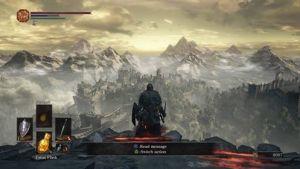
    1. “Dark Souls 3” – Ethan Russel
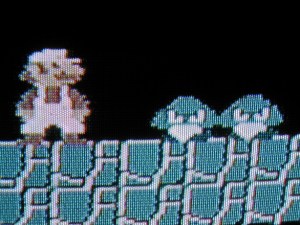
    2. “Mario” -Freeimages.com
    3. “Pacman”- Freeimages.com
    4. “Arcade”-Freeimages.com